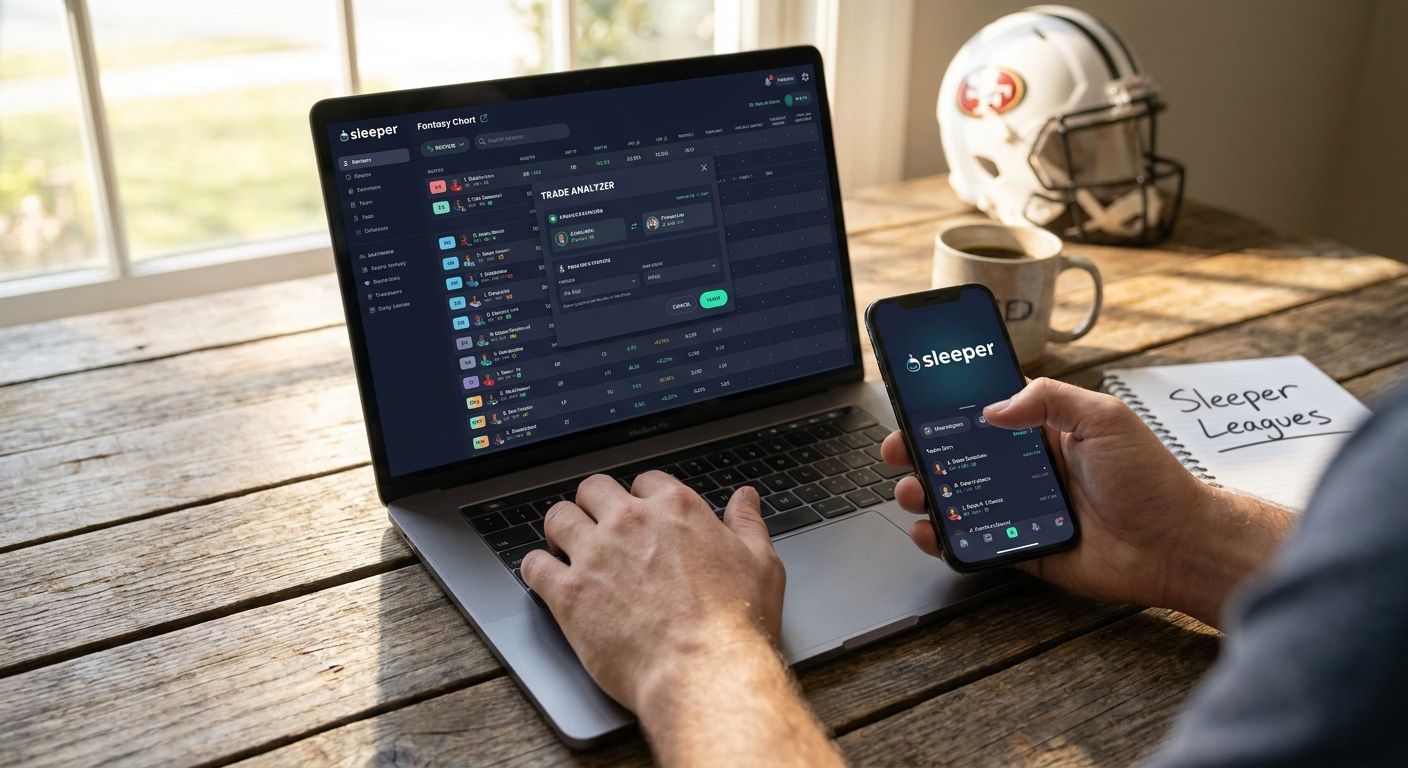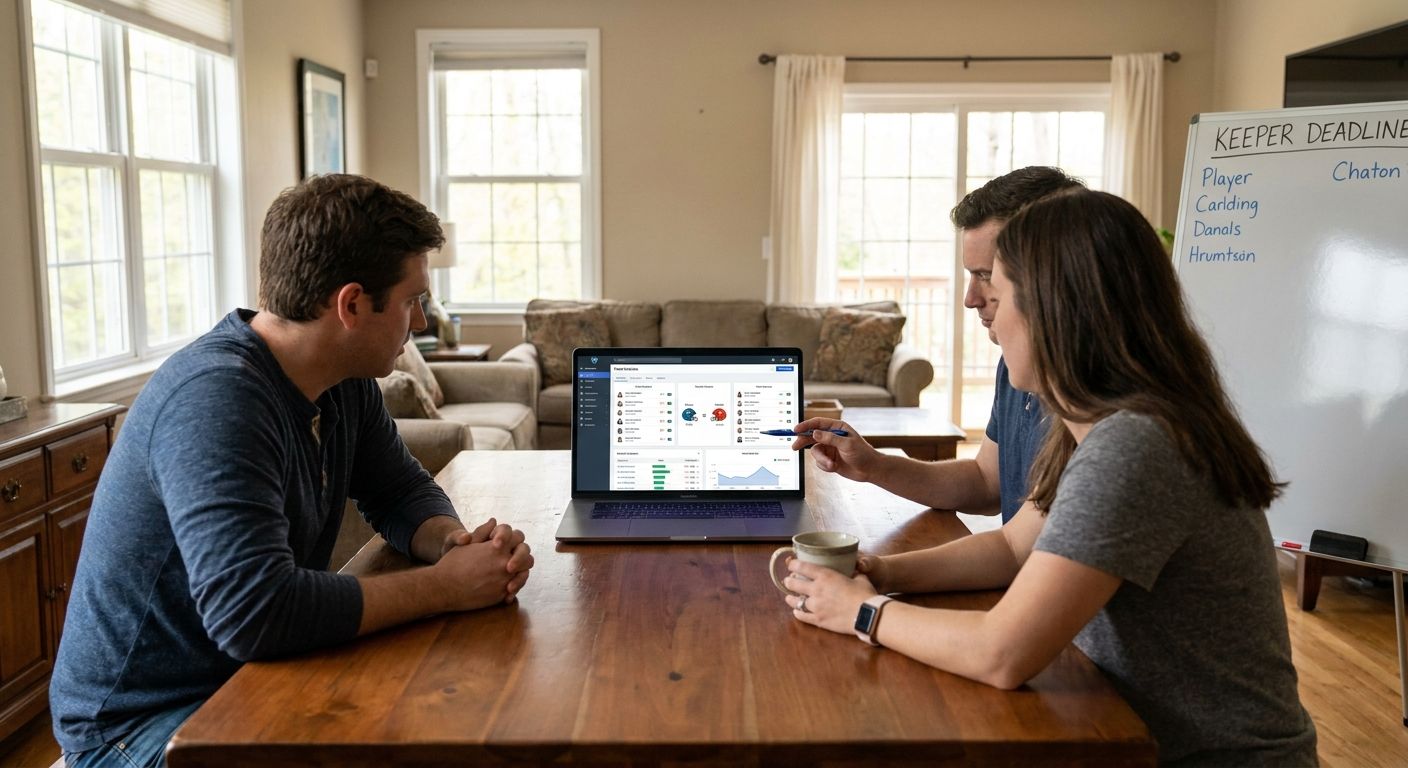
A trade analyzer built for redraft leagues will wreck your keeper league, because it has no idea what a third-round rookie pick or a two-more-years-of-team-control contract is actually worth. This guide breaks down what a fantasy football trade analyzer for keeper leagues actually needs to get right, and which tools clear that bar in 2026.
- LeagueFrenzy grades trades against your league's real scoring and keeper rules — Buy for IDP, superflex, or custom-scoring keeper leagues.
- KeepTradeCut works for consensus dynasty value but ignores your keeper cost structure — Consider as a sanity check only.
- FantasyPros and ESPN trade tools run on generic redraft ADP with no keeper-cost input — Skip for anything but standard leagues.
- Sleeper's built-in trade finder surfaces mutual interest but doesn't grade fairness — Consider as a lead-gen tool, not a verdict engine.
Why this matters
Most trade analyzers score a deal by comparing generic player rankings. That works fine in a one-year redraft league where nobody keeps anybody. It falls apart the moment your league lets managers keep 3 players at their last-season draft slot, or converts unused roster spots into future picks.
A keeper trade that looks lopsided on a generic value chart can be fair once you price in the keeper discount, and a trade that looks even can be a fleece once you account for who's entering a contract year versus who's a perpetual keep. Get this wrong twice in one offseason and you've handed away two years of draft capital for nothing.
Who this is for
This is for managers in keeper and dynasty formats — including superflex, IDP, and TE-premium leagues — who need a trade grade that reflects their league's actual keeper rules, not a generic redraft ranking pulled from a national site. If your commissioner set custom keeper costs, escalating contracts, or a rookie draft, a standard trade calculator is guessing at the one variable that decides the deal.
What to look for in a trade analyzer for keeper leagues
League-specific scoring integration
If the tool doesn't pull your actual scoring settings — six-point passing TDs, tackle-plus-assist IDP scoring, TE premium — every player valuation underneath the trade grade is built on the wrong number. A linebacker worth WR2 value in a heavy-tackle IDP league is a bench warmer under standard scoring, and no generic analyzer knows the difference.
Keeper cost baked into player value
A player you can keep for a 10th-round pick is worth more than the same player valued as a straight redraft asset, because the discount is the asset. Any analyzer that ignores your league's keeper cost structure is trading players, not trading keeper slots — which is the actual currency in these leagues.
Draft pick valuation across future years
Future picks in a keeper or rookie-draft league aren't interchangeable poker chips. A 2027 first-round pick in a league with 12 rebuilding teams is worth less than one in a league where three teams are always picking late. A trade tool needs to price picks against your league's competitive spread, not a league-agnostic pick chart.
IDP and superflex weighting
Superflex and IDP formats reshuffle positional scarcity completely. Quarterbacks jump in value once a second QB slot exists; defensive players stop being throw-ins once tackles and sacks carry real points. A trade analyzer that runs one universal value chart across formats will misprice both sides of an IDP or superflex deal.
Rookie and holdout-year treatment
Rookies and players sitting in a holdout year need to be handled as a scoring-conditional question, not a flat ranking. A rookie WR worth a first-round rookie pick in a PPR dynasty league isn't automatically worth the same in a keeper league with a hard keeper cap and no rookie draft.
Transparent trade verdicts, not just a score
A number alone ("Team A wins by 4.2 points") tells you nothing about why. Look for a verdict that shows the reasoning — which side gained keeper flexibility, which side gained immediate production — so you can actually defend or reject the trade to your league mates.
Top picks
The league-aware pick: LeagueFrenzy Connects directly to your Sleeper, MFL, Fleaflicker or ESPN league and grades trades against that league's actual scoring rules and keeper settings, not a generic ranking. One spec that matters: it builds the trade verdict from your league's own scoring configuration, so an IDP or superflex league gets a different answer than a standard PPR league running the same trade. Buy if your league runs custom scoring, keeper costs, or IDP/superflex rules.
The consensus check: KeepTradeCut Crowdsourced dynasty value rankings updated from user votes, useful as a second opinion on a player's market perception across thousands of leagues. It doesn't take your league's scoring or keeper cost as an input, so a trade that grades even there can still be lopsided inside your specific keeper rules. Consider it as a gut-check, not the final word.
The redraft holdover: FantasyPros Trade Analyzer Runs off aggregated expert rankings built for season-long redraft value, refreshed weekly during the season. It has no field for keeper cost or draft pick value, which means it's answering "who's better right now" instead of "who wins this trade under our keeper rules." Skip it for any league with a keeper or rookie-draft component.
The default-app tool: ESPN Trade Machine Built into ESPN's platform for managers already running their league there, it grades trades using ESPN's own default player values. Those values assume standard ESPN scoring, not your league's custom point settings if you've modified them. Skip unless your league runs stock ESPN default scoring with no keeper wrinkles.
The mutual-interest finder: Sleeper's trade block Surfaces which managers have players or picks flagged as available, which is genuinely useful for finding a trade partner in the first place. It doesn't grade fairness or account for keeper value once you've found a deal, so treat it as a matchmaking tool, not a verdict tool. Consider it as step one, before you run the actual grade.
What to avoid
- A tool that only shows a single "win probability" number. Without a breakdown of keeper value versus current production, you can't tell your trade partner why the deal makes sense — and you'll get outmaneuvered by the manager who did the actual math.
- Analyzers that treat rookie picks as flat rankings. A rookie pick's value shifts hard based on your league's rookie draft slot count and keeper rules; a generic pick chart from a redraft site won't reflect that.
- Anything that can't connect to your actual league. If a tool asks you to manually input your roster instead of pulling from Sleeper, MFL, Fleaflicker, or ESPN, it's working from stale or incomplete data the moment your roster changes.
Grade your next trade correctly
Connect your league and get a verdict built from your actual scoring and keeper rules.
Verdict comparison
| Tool | Keeper cost accounted for | Custom scoring pulled in | IDP/superflex aware | Verdict |
|---|---|---|---|---|
| LeagueFrenzy | Yes | Yes | Yes | Buy |
| KeepTradeCut | No | No | Partial | Consider |
| FantasyPros Trade Analyzer | No | No | No | Skip |
| ESPN Trade Machine | No | Default only | No | Skip |
| Sleeper trade block | No | No | No | Consider (matchmaking only) |
FAQ
What is a fantasy football trade analyzer for keeper leagues?
It's a tool that grades a proposed trade using your league's specific scoring rules and keeper costs instead of generic redraft rankings. In 2026, the difference matters most in leagues with custom scoring, IDP, or superflex settings.
Is a keeper trade analyzer different from a dynasty trade analyzer?
They overlap but aren't identical: dynasty leagues usually keep entire rosters and run rookie drafts, while keeper leagues cap how many players you retain at a set cost. A tool needs to price your specific keeper cap, not just assume full-roster dynasty rules.
Do free trade calculators work for keeper leagues?
Free calculators built for redraft leagues generally ignore keeper cost and draft pick value, so they'll misgrade most keeper trades. They're fine for a quick redraft sanity check but not the final word in a keeper format.
How much does a keeper-league trade analyzer cost in 2026?
Pricing varies by provider and tier — check current pricing directly on the tool's site rather than relying on a generic figure, since keeper-specific features are often gated behind a paid subscription tier.
Does IDP scoring change trade values?
Yes, significantly: a linebacker or safety worth a WR2 in a heavy-tackle IDP league can be nearly worthless under standard scoring. Any trade grade needs your league's actual IDP point settings, not a generic defensive ranking.
Are rookie picks worth more in keeper leagues than dynasty leagues?
It depends on your league's rookie draft structure and keeper cap, not a universal rule. A rookie pick's value should move with your specific rookie draft slot count, which is why flat pick charts miss the mark in keeper formats.
Can I connect my Sleeper or ESPN league directly to a trade analyzer?
Yes — several tools, including LeagueFrenzy, pull directly from Sleeper, MFL, Fleaflicker, and ESPN league data so the trade grade reflects your actual roster and scoring settings automatically.
What's the biggest mistake managers make grading keeper trades?
Treating a keeper slot as equal to the player's raw redraft value, when the keeper discount itself is the asset being traded. A player kept for a 12th-round cost is worth more than the identical player valued as a straight redraft pickup.
One last thing
The deal that costs managers the most in keeper leagues isn't the obviously lopsided one — it's the trade that grades even on a generic redraft chart but quietly hands over two years of keeper discount along with the player. Check the keeper cost on both sides before you check the player rankings.
With no other pages queued up in the catalog for this workspace, there's nothing further to link out to here — connect your own league through LeagueFrenzy once above covers the next step.